

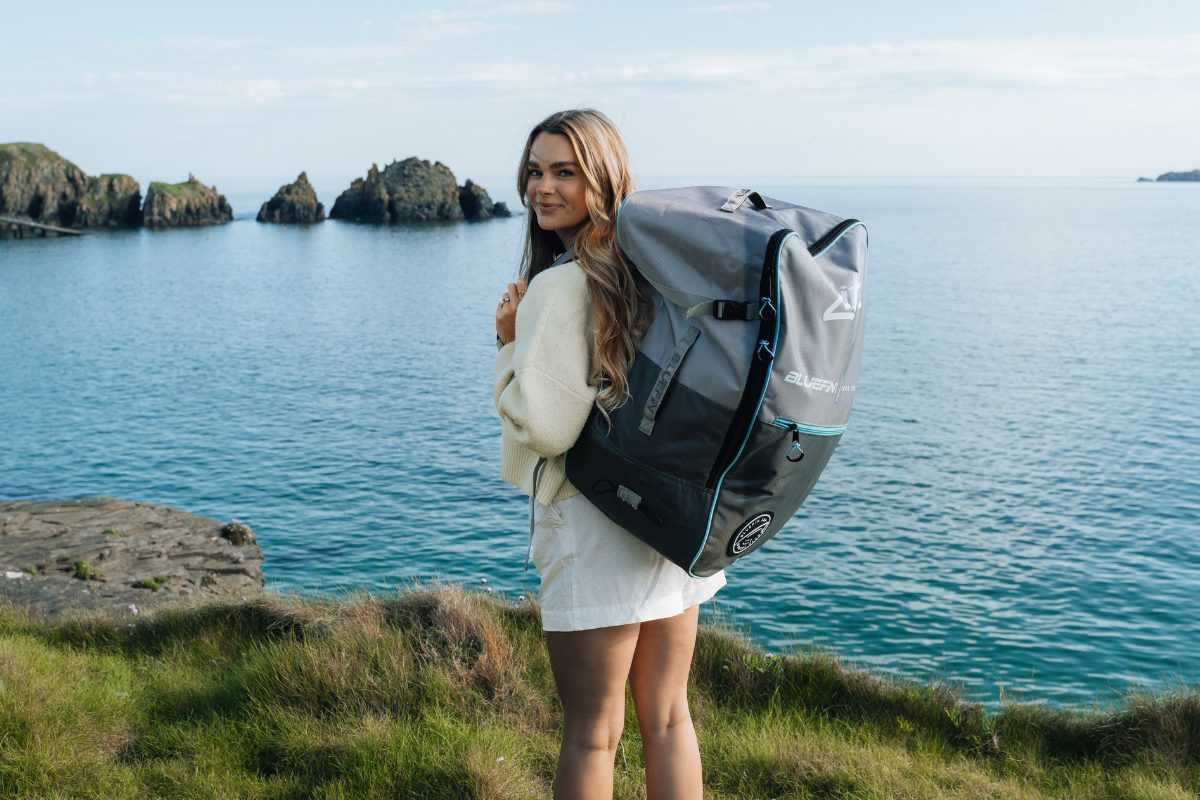

A paddleboarding holiday abroad is one of the best ways to explore new places from the water. Whether you are heading to a quiet lake in Germany, a sheltered bay in Croatia, a campsite in France or a coastal village in Spain, taking your own paddleboard gives you freedom that hire equipment cannot always offer.
The challenge is travel. Paddleboards are brilliant once you are on the water, but they can feel awkward when you start thinking about flights, ferries, car boots, campsites, campervans, hotel rooms and packed family luggage. That is where a compact inflatable SUP makes a real difference. Instead of trying to transport a hard board or a bulky setup, a board like the Bluefin Lite is designed to pack down into a much more manageable travel bag. It is compact enough to make plane travel, ferry crossings, camping trips, road trips and campervan storage far more realistic.
The key is planning properly. If you are flying, your paddleboard should usually be planned as checked hold luggage or sports equipment. If you are driving or taking a ferry, compact storage becomes just as useful because it leaves more room for the rest of your holiday kit. This guide covers how to plan your first paddleboarding holiday abroad with compact SUP travel in mind, from transport and packing to destination choice, safety and common beginner mistakes.
Why Compact Kit Matters When Travelling With A Paddleboard
When you paddle close to home, getting to the water is usually simple. You load the car, drive to the lake or coast, inflate your board, paddle, pack down and go home. Travelling abroad adds more steps. You may need to carry your board through an airport, load it onto a ferry, fit it into a hire car, store it in a hotel room, keep it dry at a campsite or pack it around luggage for the whole family. That is why compact paddleboarding kit matters before you even reach the water.
A compact inflatable paddleboard makes travel easier because it can:
- Fit more easily into car boots and campervans
- Travel as checked hold luggage on many flights
- Take up less space on ferry and road trips
- Store more neatly in tents, apartments and hotel rooms
- Be easier to carry from accommodation to the launch point
- Fit around camping gear, family luggage or dog equipment
- Make spontaneous paddles easier during multi-stop holidays
For your first SUP holiday abroad, the goal is not to pack as little as possible at any cost. The goal is to take a board that is practical to travel with and still confidence-building on the water. A board that feels too bulky may stay in the accommodation because taking it to the water feels like too much effort. A compact board removes that friction, making it more likely that you will actually paddle during your trip.
Can You Take A Paddleboard On A Plane?
Yes, you can often take an inflatable paddleboard on a plane, provided it is packed correctly and booked according to your airline’s rules. In most cases, this means travelling with your SUP as checked hold luggage or sports equipment. This is one of the most important things to understand before planning your first paddleboarding holiday abroad. A compact inflatable SUP is much easier to fly with than a hard board, but it still needs to meet your airline’s baggage requirements.
The Bluefin Lite packs down into a compact travel bag, making it much more suitable for air travel than a traditional hard paddleboard. Instead of needing roof racks, specialist transport or oversized board handling in the same way a hard board might, an inflatable SUP can be deflated, rolled, packed and checked in for the flight.
Taking An Inflatable Paddleboard As Hold Luggage
If you are flying with a paddleboard, always check your airline’s rules before booking. Airlines may treat paddleboards as standard checked baggage, sports equipment or oversized luggage depending on the packed size, weight and route. A helpful way to think about the Bluefin Lite is this:
The Bluefin Lite packs down into a compact travel bag, making it practical for checked hold luggage on many flights. Always check your airline’s baggage dimensions, weight limits and sports equipment rules before travelling. That gives you a realistic travel plan. Your paddleboard travels safely in the aircraft hold, while you keep important travel documents, valuables and essentials with you.
Before flying with your SUP, check:
- Your airline’s checked baggage size limit
- Your airline’s checked baggage weight limit
- Whether paddleboards count as sports equipment
- Whether you need to book sports equipment in advance
- Whether your board bag needs to be dropped at a separate baggage desk
- Whether any accessories need to be packed in a specific way
- Whether your travel insurance covers paddleboarding equipment
Do not assume that all airlines treat paddleboards in the same way. Rules vary by airline, route, ticket type and destination, so it is worth checking before you book flights rather than after.
Flight Packing Tips For Your Paddleboard
If you are taking your paddleboard abroad by plane, pack it carefully. Even a compact inflatable board needs protection when it is going into the hold.
Before leaving for the airport:
- Deflate the board fully
- Roll it tightly and evenly
- Remove the fin and pack it separately
- Break down the paddle into sections
- Keep hard accessories away from the board surface
- Weigh the full bag at home
- Add a strong luggage tag with your name and contact details
- Check where the board bag needs to be dropped off at the airport
- Keep travel documents and insurance details separate from the board bag
It is also worth doing a practice pack before your trip. Do not leave the first full pack until the night before you fly. Practise rolling the board, fitting everything into the bag and checking the final weight. If the bag is close to the airline’s weight limit, avoid adding clothes, shoes or extra holiday items into the SUP bag. It can be tempting to use spare space, but it may make the bag heavier, harder to handle and more expensive to check in.

Travelling With A Compact SUP By Ferry, Car, Campervan And Campsite
Flying is only one way to travel with a paddleboard. For many UK and European paddlers, the easiest SUP holidays abroad involve ferries, road trips, camping and campervan travel.
This is where a compact inflatable SUP really comes into its own. The Bluefin Lite is not just useful for flights. Its compact packed size is also helpful when space is limited in everyday holiday situations.
| Travel Type | Why a Compact SUP Helps | What to Plan For |
|---|---|---|
| Flight | Easier to manage as checked hold luggage | Airline size, weight and sports equipment rules |
| Ferry | Fits more easily around luggage or vehicle storage | Foot passenger luggage rules or car space |
| Car | Leaves more room in the boot | Secure packing and wet kit after paddling |
| Campervan | Takes up less storage and living space | Drying space and overnight storage |
| Camping | Easier to keep in a tent porch, car or cabin | Security, drying and carrying distance |
| Multi-stop holiday | Easier to repack and move between places | Transfers, taxis and accommodation storage |
Taking Your Paddleboard By Ferry
Ferries are one of the most practical ways to travel abroad with a paddleboard, especially if you are taking a car or campervan.
If you are driving onto the ferry, your board can be packed with the rest of your holiday kit. You do not need to think about airport baggage belts in the same way, and you have more flexibility with towels, water shoes, buoyancy aids, dry bags and other paddleboarding accessories.
A compact inflatable SUP helps because it does not dominate the boot. That matters when you are already packing suitcases, food, camping equipment, walking gear, children’s bags or dog kit.
If you are travelling as a foot passenger, check the ferry operator’s luggage rules before you travel. A compact board bag is easier to manage than a hard board, but you still need to be comfortable carrying it through terminals and onto transfers.
For ferry travel, pack your SUP so that:
- The board bag is easy to lift and move
- Wet kit is stored separately after paddling
- Towels are easy to access
- The fin and paddle are protected
- The board is not buried under luggage you need during the journey
- You can repack quickly if plans change
Ferry holidays are especially good for paddlers travelling from the UK into France, Spain, Ireland, the Netherlands or other European destinations. They allow you to bring your own board without making the journey feel overcomplicated.
Packing A Paddleboard For A Road Trip
A road trip gives you the most flexibility for a paddleboarding holiday abroad. You can pack your board, safety kit, warm layers, dry bags, picnic gear and spare clothes without worrying as much about weight restrictions. However, space still matters. A car fills quickly when you are packing for a week away, especially if you are travelling with family or camping equipment.
The Bluefin Lite’s compact packed format helps because it can fit more easily around your other luggage. That means your paddleboard becomes part of the trip rather than the thing everything else has to fit around.
For car travel:
- Pack the board low and secure in the boot.
- Keep the fin and paddle protected.
- Avoid placing sharp objects against the board bag.
- Keep wet kit in a separate bag after paddling.
- Do not leave the board inflated in strong heat.
- Keep valuables and accessories out of sight when parked.
- Make sure the board is dry before long storage periods.
The main advantage of a compact SUP on a road trip is flexibility. If you spot a safe lake, river or sheltered bay along your route, your board is already with you.
Camping With A Compact Paddleboard
Camping and paddleboarding are a natural fit. Campsites often put you close to lakes, rivers, reservoirs or coastlines, and the slower pace of camping suits early morning or evening paddles. The challenge is storage. Tents, awnings and camper setups can quickly become crowded, especially when you add wet towels, cooking equipment, sleeping bags and outdoor clothing.
A compact board is easier to store in:
- A tent porch
- A car boot
- A campervan storage space
- A campsite cabin
- A glamping pod
- A covered outdoor area
- A designated kit space away from sleeping bags
The main camping rule is simple: do not leave your paddleboard packed away wet for longer than necessary. After paddling, rinse off salt, sand or mud where possible, dry the board properly, and avoid storing it in direct sunlight for long periods. A compact SUP also makes campsite launches easier. If your pitch is a short walk from the water, carrying a smaller packed board is much more manageable than moving a hard board or a bulkier setup.
Why The Bluefin Lite Works Well For Paddleboarding Holidays Abroad
The Bluefin Lite is a practical choice for a paddleboarding holiday abroad because it focuses on the part of SUP travel that often gets overlooked: how easy the board is to move, store and pack between sessions. On the water, you want a board that feels stable and enjoyable. On holiday, you also need a board that works with real travel situations: airports, ferries, cars, campsites, apartments, hotels and campervans.
The Lite is designed for paddlers who want a more compact inflatable SUP without losing the freedom of taking their own board abroad.
It is especially useful if:
- You want to take your SUP as hold luggage on a flight
- You are travelling by ferry with a car or campervan
- You are planning a camping holiday near water
- You need a board that fits around family luggage
- You want easier storage at home and abroad
- You prefer using your own board rather than hiring
- You are planning a multi-stop European adventure
This makes it a strong option for relaxed holiday paddling, especially on calm lakes, sheltered bays and gentle coastal areas. It is not about making the trip more extreme. It is about making paddleboarding easier to include in the holiday.
Choosing The Right Destination For Your First SUP Holiday Abroad
A compact board makes travel easier, but destination choice still matters. For a first paddleboarding holiday abroad, choose water that suits your ability rather than chasing the most dramatic scenery.
Look for destinations with:
- Calm lakes, lagoons or sheltered bays
- Easy launch points
- Accommodation close to the water
- SUP schools or local outdoor centres nearby
- Clear local water access rules
- Alternative activities for windy days
- Simple storage for your board and kit
The best first SUP holiday destinations are usually flexible. You want somewhere that still works if the wind picks up, the sea becomes choppy or one launch point is too busy.

Good Holiday Types For A Compact SUP
A compact inflatable paddleboard works especially well for:
- European lake holidays
Lake-based trips are often ideal for beginners. You avoid tides and swell, and many lakeside areas have campsites, apartments and easy launch points. - Coastal campsite holidays
Sheltered bays and beach campsites can work well, provided you check wind direction, local rules and swimming zones before paddling. - Ferry and road trips
Driving through France, Germany, Spain, Italy, Croatia or Austria with a compact SUP gives you the option to paddle when conditions suit, rather than building the whole trip around one route. - Campervan touring
A compact SUP fits well into flexible travel, where plans may change depending on weather, road conditions and where you choose to stop. - Family holidays
If paddleboarding is one activity among many, a compact board is easier to bring without sacrificing too much luggage space.
Germany is a particularly good example of a destination where compact SUP travel makes sense. Many paddling trips centre around lakes, campsites and outdoor towns, where a board that stores neatly and moves easily can make the whole holiday feel smoother.
Paddleboarding Holiday Packing Checklist
Packing for a paddleboarding holiday abroad is about balance. You want everything needed for safe, comfortable paddling, but not so much that your board bag becomes heavy and awkward.
Essential Paddleboarding Kit
Pack:
- Inflatable paddleboard
- Paddle
- Pump
- Fin
- Leash suitable for your paddling environment
- Buoyancy aid or personal flotation device
- Dry bag
- Waterproof phone pouch
- Repair kit
- Microfibre towel
- Water bottle
- Sun protection
- Water shoes
- Lightweight warm layer
Do not assume you can easily replace missing SUP parts abroad. A forgotten fin, pump hose or leash can stop you paddling, especially in quieter lake towns, campsites or remote coastal areas.
Travel Extras
For overseas trips, also pack:
- Travel insurance details
- Airline or ferry baggage confirmation
- Passport and booking copies
- Local emergency numbers
- Offline maps
- Small first aid kit
- Reusable rubbish bag
- Spare dry clothes
- Board bag luggage tag
- Wet kit bag for the journey home
It is also worth bringing a few extra items that make travel easier rather than paddling itself:- A large towel for drying the board before packing
- A separate bag for wet clothing
- A small padlock for campsite or apartment storage
- A lightweight repair tape option for minor kit issues
- A reusable water bottle for hot travel days
- A spare strap for keeping kit tidy
Good packing is not about taking everything. It is about taking the right things and knowing where they are when you need them.
Safety Tips For Paddleboarding Abroad
A compact SUP makes travel easier, but safe paddling still depends on good decisions. Before launching abroad, check local rules for the exact waterway. Some lakes, rivers, canals and coastal zones have restrictions, permits, wildlife areas, harbour zones or swimming-only areas.
Before each paddle, check:
- Wind speed
- Wind direction
- Local weather warnings
- Water temperature
- Boat traffic
- Tides if paddling on the coast
- Entry and exit points
- Whether paddleboards are allowed
- Whether a permit or local licence is required
For beginners, offshore wind is a clear reason not to paddle. It can make the water look calm near shore while pushing you away from land.
Safety Habits That Travel Well
Wherever you are paddling, the same simple safety habits apply:
- Wear a buoyancy aid.
- Use the correct leash for the environment.
- Keep your phone in a waterproof pouch.
- Tell someone where you are going.
- Stay close to shore on unfamiliar water.
- Avoid paddling alone in new conditions.
- Turn back before you feel tired.
- Respect boats, swimmers and wildlife.
These habits are especially important abroad, where signs may be in another language and local hazards may not be obvious.

Common Beginner Mistakes To Avoid
Your first paddleboarding holiday abroad should feel calm and enjoyable. Most problems come from overconfidence, poor packing or assuming rules will be the same as at home.
Mistake 1: Not Checking Airline Rules Early Enough
If you are flying, check baggage rules before booking where possible. A compact paddleboard is easier to travel with, but the airline’s own size, weight and sports equipment rules still apply.
Mistake 2: Packing the Board Bag Too Heavily
It is tempting to add clothes, shoes and extra items into the SUP bag. This can quickly push the bag over weight limits or make it harder to handle.
Mistake 3: Choosing Accommodation Too Far From Water
Even with a compact board, daily carrying becomes tiring if your launch point is too far away. Prioritise accommodation close to calm water, parking or campsite access.
Mistake 4: Forgetting About Wet Kit
A wet board is manageable at home. Abroad, it can become a problem in hire cars, tents, hotel rooms and airport bags. Bring towels, liners and time to dry the board before travelling.
Mistake 5: Planning Big Routes Too Soon
Keep your first sessions short. Paddle close to shore, learn the local conditions and build confidence before committing to longer routes.
Mistake 6: Ignoring Rest Days
Paddleboarding uses your legs, core, shoulders and balance more than many beginners expect. A good SUP holiday should include rest days, especially if you are paddling in heat or combining SUP with walking, swimming or cycling.
Where The Lite Fits Into A SUP Holiday
The Bluefin Lite is the most relevant board for this kind of holiday because the main challenge is compact travel. It is designed to pack down smaller, store more easily and move through travel environments with less bulk than a hard board or larger SUP setup. The Lite is a practical choice if your holiday involves flights, ferries, camping, car boots, campervans or small accommodation. It is especially useful when paddleboarding is part of a wider trip rather than the only reason for travelling.
That does not mean it is the right choice for every paddler. The Bluefin Cruise range may suit those who want a more traditional all-round setup, while the Carbon range may suit confident paddlers looking for a performance-led board. For a first paddleboarding holiday abroad, however, the Lite’s strongest advantage is clear: it makes taking your own board feel more realistic.
Summary
A successful paddleboarding holiday abroad starts with realistic travel planning. Taking your own SUP is much easier when the board packs down into a compact bag, fits into normal holiday transport and can be stored without taking over your accommodation.
The Bluefin Lite is useful because it focuses on compact travel. It can be packed as checked hold luggage on many flights, stored more easily in cars and campervans, carried onto ferries, and fitted around camping gear.
Before your first trip, remember to:
- Check airline or ferry luggage rules before booking
- Plan your board as hold luggage when flying
- Weigh the full packed bag at home
- Choose calm, beginner-friendly water
- Stay close to suitable launch points
- Pack safety kit, not just paddle kit
- Check local rules, permits and weather
- Leave time to dry and repack the board before travelling home
Compact kit gives you freedom, but good planning gives you confidence.
Share:
Bluefin Cruise 10.8 SUP im Test (2026): Hohe Qualität & durchdachtes Gesamtpaket
Family Paddleboarding Holidays in the UK and Europe: Where to Go, What to Pack and How to Plan