

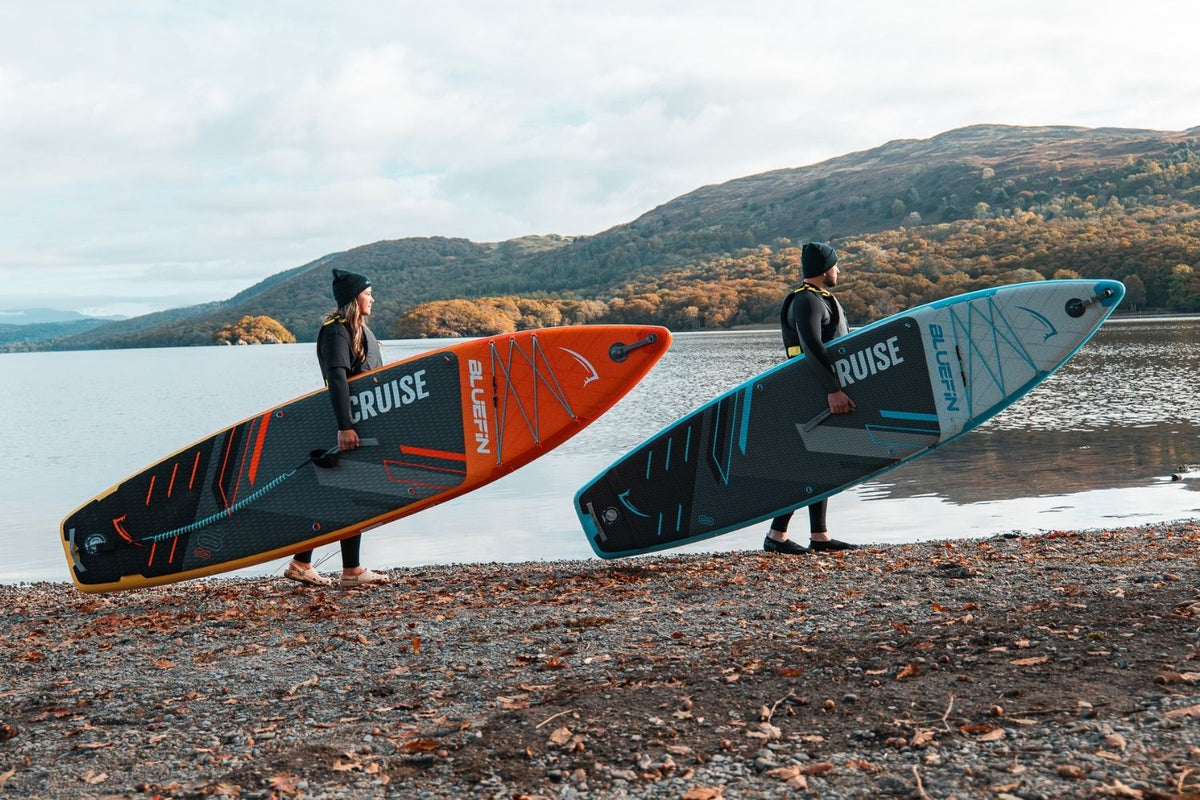

Europe is home to an extensive network of canals, rivers and historic inland waterways. From the tree-lined landscapes of southern France to the waterways of the Netherlands and Germany, these routes offer a fascinating perspective on the continent. For paddleboarders, they present opportunities to explore historic architecture, traditional villages and countryside at a slower pace.
Canal paddleboarding in Europe can be particularly appealing to people who enjoy flat-water touring, relaxed outdoor adventures and travelling with an inflatable SUP. But not every European canal permits stand-up paddleboarding. Many are working waterways used by commercial vessels, and access regulations can differ substantially between countries, regions and individual sections. Choosing the right location is therefore essential. This guide explores European canal destinations worth researching, explains important access considerations and helps you prepare for your next calm-water SUP adventure.
Why Explore Europe's Canals by Paddleboard?
Stand-up paddleboarding is often associated with beaches, mountain lakes and dramatic coastlines. However, inland waterways offer a different experience, combining recreation with opportunities to discover local history and landscapes.
Calm Water and More Predictable Conditions
One of the main attractions of canal paddleboarding is the possibility of relatively sheltered water. Unlike exposed coastlines, many canals have limited wave action and no tidal surf. This can allow paddlers to focus on steady strokes, balance and covering distance comfortably. However, calm water does not mean an absence of hazards. Commercial traffic, hydraulic structures and limited landing points can make some canals unsuitable for recreational SUP. The ideal route is one where paddleboarding is explicitly permitted, boat traffic is manageable and suitable entry and exit points are available.
Discover Cities from a Different Perspective
European cities have developed around waterways for centuries. Canals once played essential roles in trade, transport and industrial activity. Today, many pass historic buildings, bridges and attractive public spaces. Exploring a permitted urban waterway by paddleboard can provide an entirely different view of a destination.
Combine Paddling with Travel
Inflatable SUPs are particularly useful for European adventures because they can be packed into a transport bag. Depending on the board's packed dimensions and the transport provider's rules, this may make it possible to combine paddleboarding with camping, car travel or extended holidays. The flexibility to take your own equipment also allows you to explore suitable waterways beyond commercial SUP hire locations.
European Canal Destinations Worth Exploring
The following destinations offer distinctive inland-waterway landscapes and established recreational water cultures. They should be treated as locations to research rather than unrestricted launch recommendations.
1. Canal du Midi, France
The Canal du Midi is one of Europe's best-known historic waterways. Running through southern France, it links Toulouse with the Mediterranean-facing inland waterway system and is celebrated for its engineering heritage and landscapes. The canal passes picturesque villages, historic bridges and countryside characteristic of the Occitanie region.
Why it appeals to paddleboarders:
Scenic tree-lined waterways.
Historic locks and bridges.
Beautiful rural surroundings.
Opportunities to combine outdoor activities with a cultural holiday.
Although the landscape looks inviting, this is an actively navigated canal. Do not assume that recreational SUP is permitted on any particular section. Before planning a paddle, confirm with Voies Navigables de France (VNF) and the appropriate local authority whether stand-up paddleboarding is allowed. A locally organised SUP outing on an authorised stretch or nearby designated waterbody may be the most practical approach.
Best suited to: Travellers interested in French canal heritage and researching organised or explicitly authorised paddling opportunities.
2. Burgundy Canal, France
The Burgundy Canal, or Canal de Bourgogne, passes through a region famous for historic villages, rural landscapes and traditional French waterways. Stone bridges, lock houses and wooded banks create a particularly attractive setting. For SUP enthusiasts, the region is worth considering when researching calm-water outdoor activities.
What makes it appealing?
Attractive countryside and traditional canal architecture.
A quieter rural atmosphere away from major cities.
Opportunities to combine paddling holidays with cycling and walking.
A strong connection to local history and culture.
As with other French canals, paddling permission must be checked section by section. Locks and navigation infrastructure may restrict the suitability of otherwise calm-looking stretches.
Best suited to: Travellers looking for countryside-based SUP holidays with alternative local waterways available.
3. Berlin's Waterways, Germany
Germany has a strong paddling culture, with numerous lakes, rivers and managed waterways. Berlin is a particularly interesting destination because its waterways connect neighbourhoods, parks and surrounding natural landscapes. The Landwehrkanal is one of the city's best-known urban canals, while the wider Berlin and Brandenburg region offers extensive inland-water recreation.
Why consider Berlin?
A combination of urban scenery and green spaces.
Established paddlesports communities.
Opportunities for guided SUP experiences in permitted areas.
Access to nearby lakes and calmer recreational waters.
Can You Paddleboard on the Landwehrkanal?
The Landwehrkanal is a working waterway, not an unrestricted recreational SUP route. Its location and attractive scenery do not automatically make it suitable for standing paddleboard traffic. Before launching, verify the current rules with the responsible waterways authority. If access is restricted, choose a designated SUP area on one of Berlin's permitted lakes instead. For beginners, an authorised lake location may be preferable to a busy city canal.
4. Amsterdam's Canals, Netherlands
The Netherlands is closely associated with canals and inland navigation. Amsterdam's waterways are internationally recognised for their architecture, bridges and historic atmosphere. Seeing these surroundings from water level can be memorable, but the city's central canals are also busy transport corridors.
Important considerations:
Frequent tourist boats and commercial traffic.
Narrow sections with limited manoeuvring space.
Bridges and restricted visibility.
Local navigation rules and possible SUP restrictions.
Limited safe places to enter or leave the water.
Central Amsterdam should not be treated as a beginner paddleboarding destination. For a more suitable experience, investigate authorised recreational waters outside the busiest city centre. The Netherlands offers a variety of lakes, smaller waterways and organised paddlesports opportunities that may provide better conditions.
Best suited to: Experienced paddlers researching approved routes and travellers interested in organised SUP experiences.
5. Utrecht's Waterways, Netherlands
Utrecht is another Dutch city where waterways are central to the urban landscape. Its historic canals are surrounded by distinctive wharf cellars, attractive bridges and lively waterside spaces. The city's setting makes it an appealing location for water-based sightseeing. However, permission to use a canal for recreational paddleboarding must be established before entering the water. Some stretches may have narrow channels, boat activity and difficult access points. For visitors, an authorised local hire company or organised paddling operator can provide practical guidance on appropriate routes. Alternatively, investigate quieter recreational waters beyond the historic centre.
Best suited to: Travellers seeking a combination of urban exploration and approved local paddling experiences.
6. Bruges and the Waterways of Flanders, Belgium
Belgium offers an interesting mix of historic waterways, rural canals and established recreational paddling locations. Bruges is particularly well known for its picturesque canals, medieval architecture and bridges. However, its central tourist waterways should not be confused with freely accessible SUP routes. Commercial sightseeing boats operate in confined spaces, and local restrictions can make independent paddling inappropriate or prohibited. Paddlers should instead research officially designated recreational sections elsewhere in Flanders, or use an authorised operator where SUP activities are specifically offered.
Why explore the wider region?
Historic waterways and traditional towns.
Cycling routes alongside many canals.
Landscapes that combine urban heritage with open countryside.
Opportunities to discover approved recreational paddling areas.
Best suited to: Travellers who enjoy combining SUP, cycling and European city breaks.
European Canal Paddleboarding: Destination Comparison
Destination |
Country |
Main appeal |
Access consideration |
Canal du Midi |
France |
Historic waterways and Mediterranean landscapes |
VNF and local navigation restrictions |
Burgundy Canal |
France |
Rural scenery and traditional villages |
Check specific authorised sections |
Berlin waterways |
Germany |
Urban culture and surrounding lakes |
Federal and local navigation rules |
Amsterdam canals |
Netherlands |
Historic architecture |
Busy traffic and city restrictions |
Utrecht waterways |
Netherlands |
Historic wharves and bridges |
Local permission and limited space |
Flanders canals |
Belgium |
Heritage and countryside |
Regional and municipal restrictions |
Best overall approach: Choose a confirmed SUP-friendly section rather than selecting a route solely because it looks attractive on a map.
Is Paddleboarding Allowed on European Canals?
There is no single set of rules covering recreational paddleboarding on every canal in Europe.
Regulations depend on national legislation, navigation authorities, local restrictions and the type of waterway.
France: Check VNF and Local Regulations
Voies Navigables de France manages a major part of the French inland navigation network. Its recreational-water guidance explains that activities such as stand-up paddleboarding may be possible on suitable waterways, subject to local restrictions. VNF advises recreational users to stay clear of navigation hazards, avoid interfering with vessels and not practise near locks, dams or certain port facilities.
VNF
Before paddling, check:
Whether SUP is permitted on the chosen section.
Local navigation regulations.
Restrictions near locks and commercial facilities.
Temporary closures and water conditions.
Whether specific flotation equipment is required.
For official guidance, consult Voies Navigables de France.
Germany: Understand Federal and Local Rules
Germany's waterways include federal navigations, regional waterways and lakes administered under different arrangements. The rules for SUP may differ depending on whether you are on a commercial canal, a city waterway or a designated recreational lake. Permission on one waterway does not imply permission on another. Pay close attention to restricted areas, commercial traffic, nature reserves and any requirements applicable to your craft. For an unfamiliar location, contacting a local SUP school or waterways authority is often the simplest way to identify an appropriate launch.
Netherlands: Respect Commercial Navigation
Dutch waterways form an important part of the national transport network. Commercial vessels, pleasure boats and paddlers may share certain areas, but small recreational craft are not necessarily permitted everywhere. Before paddling, check the local waterway authority's navigation regulations. Busy urban canals require particular caution because bridges and bends can restrict visibility.
Belgium: Check Regional and Local Access
Belgium's inland waterways are subject to regional management, with additional local restrictions where applicable. Some areas provide designated locations for recreational paddling, while others prioritise commercial navigation or protected habitats. Look for officially approved recreational routes and confirm whether stand-up paddleboards are included in the permitted activities. Never rely solely on a social media photograph as evidence that a route is legal or safe.
Essential Safety Tips for European Canal Paddleboarding
European canals can appear remarkably peaceful, especially during warm summer weather.
However, they may contain hazards that are not immediately visible.
1. Understand Commercial Boat Traffic
Some European canals are used by large cargo vessels. These boats can generate wakes, have substantial blind spots and require significant distances to stop. A paddleboarder should never enter the path of a commercial vessel or assume that its crew can see them. Avoid major shipping channels unless an authorised paddling route explicitly allows their use and you have the necessary experience.
2. Stay Away from Locks and Dams
Locks and weirs present serious hazards. Strong water movement, changing levels and hydraulic forces can make these areas dangerous even where the surrounding water appears calm. Never paddle into an operating lock or approach a dam. Follow local exclusion zones and use authorised portage arrangements where available.
3. Choose the Correct Leash Arrangement
Leash selection requires particular attention on inland waterways. A conventional ankle leash may create entrapment risks around structures, submerged objects and moving water. Use appropriate paddlesport safety guidance to select the correct system for the conditions, including quick-release arrangements where needed. A properly fitted buoyancy aid is also important.
4. Prepare for European Weather
Conditions vary significantly across Europe. In northern Germany and the Netherlands, wind can make otherwise calm water difficult to navigate. In southern France, summer heat increases the importance of hydration and sun protection. Thunderstorms can develop quickly in many regions. Check forecasts and avoid launching when severe weather is possible.
5. Be Mindful of Water Quality
Urban and agricultural waterways can experience pollution, algal growth and poor water quality. Avoid contact with visibly contaminated water. Wash hands before eating, keep cuts covered and clean your paddleboard after use.
6. Respect Protected Habitats
Europe's canals and waterways provide habitats for fish, waterbirds and other wildlife. Paddle slowly near sensitive areas, avoid disturbing nesting birds and do not launch through fragile vegetation. Where possible, use established entry points rather than creating new paths along the bank.
What Is the Best Paddleboard for Exploring European Canals?
Your choice of paddleboard should reflect the type of trip you are planning. A short recreational outing near a holiday destination has different requirements from a longer-distance flat-water tour. For travelling around Europe, inflatable paddleboards offer an appealing combination of portability, storage convenience and versatility.
Cruise: A Versatile Travel Companion
The Cruise range is worth considering if you want a board for recreational paddling across a variety of suitable environments. An all-round paddleboard can provide a stable platform for exploring sheltered waterways and developing confidence. When travelling, consider board length, width, packed dimensions and total kit weight. Ease of handling and reliable control should come before outright speed.
Carbon: Exploring Longer Flat-Water Routes
For experienced paddlers interested in extended flat-water touring, the Carbon range offers another category to compare. Factors worth considering include board rigidity, stability, tracking and how the construction suits your paddling style.
Lite: Convenient for European Holidays
Portability can be especially important when transporting a paddleboard between destinations. The Lite range may suit travellers looking for a lightweight recreational SUP setup. If travelling by air, rail or coach, confirm equipment allowances with the transport operator.
Planning a European Canal Paddleboarding Holiday
The most enjoyable SUP holidays allow enough time for exploring without turning every day into a demanding challenge. A simple approach is to choose a region with several confirmed paddling locations and build other outdoor activities around them.
Step 1: Select Your Destination
Consider what matters most to you.
Do you want rural scenery, historic towns, warm weather or easy access from a major city?
For example:
France: Attractive canal heritage and countryside.
Germany: Extensive inland-water recreation and lake-based SUP opportunities.
Netherlands: Historic waterways and established watersports culture.
Belgium: Historic towns and opportunities to combine paddling with cycling.
Step 2: Confirm Legal Access
Before booking accommodation around a particular route, contact the relevant waterway authority or a reputable local SUP operator.
Ask whether private stand-up paddleboarding is permitted, where you can launch and which sections should be avoided.
Confirm whether permits, registration, insurance or buoyancy equipment are required.
Step 3: Choose a Short Initial Route
Even experienced paddlers should begin cautiously on unfamiliar waterways.
A short route allows you to assess boat traffic, wind, access points and your own comfort.
Choose an out-and-back route where conditions permit, rather than committing immediately to a long point-to-point journey.
Step 4: Pack Appropriately
A practical European SUP checklist includes:
Paddleboard, paddle and compatible fin.
Pump and repair kit.
Correctly fitted buoyancy aid.
Appropriate leash system.
Waterproof phone protection.
Drinking water and sun protection.
Suitable footwear and spare clothing.
Offline maps and emergency contact information.
Any required permits or documentation.
Step 5: Prepare for Transport
Inflatable SUPs make it possible to transport equipment more conveniently, but weight and packed dimensions still matter.
Check airline, train and vehicle restrictions before departure.
When travelling internationally, make sure that your equipment is clean and dry to reduce the risk of transferring invasive organisms between waterways.
Step 6: Leave Time for Exploration
A paddleboarding holiday should not revolve entirely around distance.
Allow time to visit local villages, explore walking trails and discover regional food and culture.
By travelling at a relaxed pace, you can appreciate the surroundings rather than concentrating solely on reaching the next destination.
Common Mistakes When Paddleboarding European Canals
Assuming Flat Water Means Easy Paddling
A canal may look calm while carrying large vessels or having dangerous structures nearby.
Always assess navigation hazards, not simply the surface of the water.
Underestimating Wind
A straight canal can create a wind corridor.
Paddling into a headwind on the return journey may require significantly more effort than expected.
Ignoring Local Regulations
European waterway restrictions vary widely.
A location may permit kayaking but restrict other craft, or allow paddling only during certain periods.
Confirm that the regulations explicitly cover SUP.
Carrying Too Much Equipment
Overloading a board affects stability and manoeuvrability.
Keep essential items secure, distribute weight appropriately and stay within the manufacturer's stated limits.
Planning Routes Without Exit Points
Steep walls, private banks and industrial infrastructure can make leaving a canal difficult.
Identify safe exits before launching and avoid routes where you cannot get out easily in an emergency.
Paddleboarding Responsibly Across Europe
European waterways are shared spaces supporting transport, recreation and biodiversity.
Protecting these environments is part of being a responsible paddler.
Practical steps include:
Taking all litter away with you.
Cleaning equipment between different waterways.
Avoiding disturbance to wildlife.
Respecting local conservation restrictions.
Using established launch locations.
Maintaining and repairing equipment where possible.
Choosing durable equipment and looking after it properly can also help extend its useful life.
Frequently Asked Questions About European Canal Paddleboarding
Can You Paddleboard on Canals in Europe?
Yes, stand-up paddleboarding is possible on certain European inland waterways.
However, access is not universal.
Check the rules for the exact canal and section you intend to use.
Is the Canal du Midi Suitable for Paddleboarding?
The Canal du Midi is visually attractive, but it is also an actively navigated waterway with locks and other restrictions.
Do not assume SUP is permitted. Confirm local regulations before planning an outing.
Can You Paddleboard Through Amsterdam?
Paddleboarding access in Amsterdam depends on local regulations and the particular waterway.
The central canals are busy environments and are not ideal for beginners.
Research authorised routes or consider organised paddling experiences on designated waters.
Where Can You Paddleboard in Germany?
Germany offers numerous SUP opportunities, particularly on lakes and designated recreational waters.
Berlin and Brandenburg are worth exploring for their inland-water landscapes, but federal and local navigation restrictions must be respected.
Do You Need a Licence to Paddleboard in Europe?
Requirements vary by country and waterway.
Some locations may require permits, registration or other authorisation, while others may allow recreational paddling without an individual licence.
There is no single licence covering all European canals.
What Is the Best Season for Canal Paddleboarding in Europe?
Late spring to early autumn is often the most comfortable period for recreational paddling across much of Europe.
Nevertheless, temperature, water conditions, traffic and seasonal restrictions vary by region.
Southern Europe can become very hot in summer, while northern destinations may experience stronger winds and cooler water.
Can Beginners Try European Canal Paddleboarding?
Yes, where conditions and regulations allow.
However, a designated SUP-friendly lake or an organised beginner session is often a better introduction than a commercially navigated canal.
Focus on predictable conditions, easy access and professional instruction.
Summary: European Canal Paddleboarding Essentials
France: Explore the historic Canal du Midi and Burgundy Canal regions, but confirm local SUP permission.
Germany: Research designated recreational waterways around Berlin and Brandenburg.
Netherlands: Consider authorised SUP locations beyond heavily trafficked city canals.
Belgium: Investigate approved paddling areas in Flanders rather than assuming historic canals are accessible.
Safety: Stay clear of locks, dams and commercial navigation hazards.
Equipment: A stable, portable inflatable paddleboard is practical for many recreational trips.
Planning: Verify local access, weather, transport arrangements and emergency exit points before launching.
Conclusion: Explore Europe's Waterways at Your Own Pace
Canal paddleboarding in Europe offers a fascinating way to discover the continent's landscapes, history and relationship with water.
From French countryside canals to German inland waterways and the historic settings of the Netherlands and Belgium, the possibilities for water-based exploration are diverse.
The most important step is choosing a location where SUP is permitted and conditions match your experience.
A successful trip does not depend on paddling through a famous city centre or covering an ambitious distance.
Sometimes, the best experience is a quiet morning on an authorised stretch of sheltered water, with beautiful scenery and nowhere particular to rush.
Choose your route carefully, respect the local environment and let the journey become part of the adventure.
Teilen:
What to Wear Paddleboarding in Cooler Weather | EU Guide